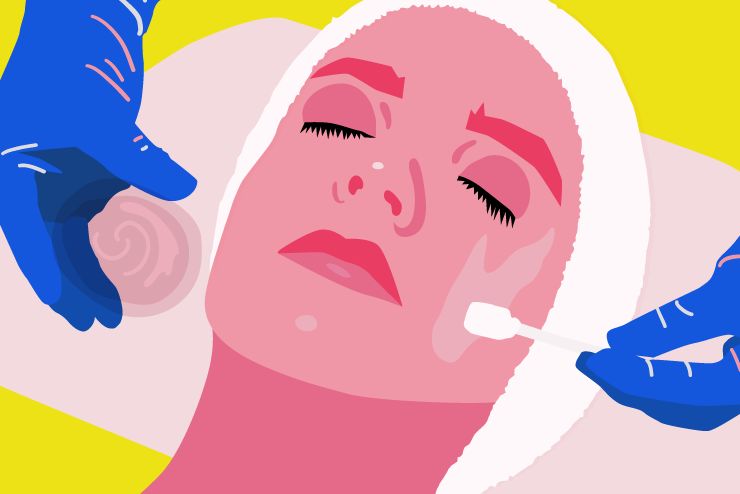
A chemical peel is a cosmetic dermatology procedure in which a chemical solution is applied to the skin to deliberately injure controlled layers of skin. This triggers a process of exfoliation, peeling, and regeneration, with the goal of improving skin texture, tone, and appearance.
In simpler terms: you apply a carefully chosen acid (or combination of agents) to the surface of your skin, which causes it to peel off. The fresh skin underneath is usually smoother, more even, and healthier in appearance.
Dermatologists sometimes call the process chemoexfoliation. The depth of the chemical injury is carefully controlled to produce predictable results while minimizing risks.
How It Works (the Biology)
When the peeling agent is applied:
-
It causes keratocoagulation (coagulation of skin proteins) and denaturation of proteins in the epidermis or dermis.
-
This controlled injury triggers an inflammatory cascade—release of cytokines and chemokines—which signals the skin to heal.
-
The healing response includes:
-
New keratinocyte (skin cell) regeneration
-
Remodeling of collagen, elastin, and other dermal structural proteins
-
Reorganization of extracellular matrix components
-
Renewal of the epidermis (surface layer)
-
-
As the damaged layers peel off, the newer skin emerges with reduced irregularities, improved tone, and smoother texture.
The depth of injury (how far the chemical penetrates) determines how dramatic the results and how long the recovery.
Types / Depths of Chemical Peels
Chemical peels are broadly categorized by their depth of penetration: superficial (light), medium, and deep. Each has different uses, risks, and recovery timelines.
| Depth | Typical Agents / Acids | What Layers Are Affected | Common Uses | Recovery Time | Risks |
| Superficial (Light) | Alpha hydroxy acids (AHAs, e.g. glycolic, lactic), salicylic acid, low-strength trichloroacetic acid (TCA) | Epidermis (outer layer) and very upper dermis | Mild pigmentation, dull skin tone, superficial fine lines, mild acne | 3–7 days | Mild irritation, redness, peeling, post-inflammatory hyperpigmentation (PIH) |
| Medium | Higher concentrations of TCA, Jessner’s peel (resorcinol + lactic + salicylic), sometimes glycolic in higher strengths | Epidermis + papillary dermis | Moderate wrinkles, pigment irregularities, superficial acne scars, photoaging | 1–2 weeks (sometimes more) | Prolonged redness, swelling, PIH, scarring if misused |
| Deep | Phenol alone or in combination with croton oil, strong TCA (above 35–50%) | Deeper dermis, possibly reticular dermis | Deep wrinkles, severe photoaging, scarring, precancerous lesions | Several weeks to months | High risk: scarring, pigment changes, infection, systemic toxicity (particularly phenol) |
Notes & nuances:
-
Jessner’s peel is often considered a medium-depth peel and is a blend of resorcinol, salicylic acid, and lactic acid in an ethanol base.
-
Deep peels using phenol carry systemic risks (e.g. effects on the heart, kidneys) and thus are performed in limited segments timewise.
-
In darker skin types (Fitzpatrick III–VI), even superficial or medium peels carry a higher risk of post-inflammatory hyperpigmentation (PIH) or unwanted pigment changes.
Who It’s For / What It Can Treat
When done by an experienced dermatologist, chemical peels are used to address:
-
Fine lines and wrinkles (especially around the mouth, cheeks)
-
Uneven skin tone, sun spots, age spots, freckles (dyschromia)
-
Mild to moderate acne and post-acne hyperpigmentation or scarring
-
Photoaging (sun damage)
-
Superficial precancerous lesions (e.g. actinic keratoses) in some cases
However, chemical peels are not ideal for:
-
Deep folds, severe sagging, or loose skin (those typically require surgical or laser methods)
-
Deep acne scars (ice-pick or deep box scars) may not respond fully to peeling alone
-
Individuals with certain skin conditions (e.g. active eczema, psoriasis, very sensitive skin) unless carefully controlled
Benefits & Expected Outcomes
When selected and executed appropriately, chemical peels offer:
-
Improved skin texture and smoother surface — by removing dull, damaged cells.
-
More uniform tone and reduced pigmentation — especially for superficial spots and melasma (when combined with proper protocols)
-
Reduction in fine lines and mild wrinkles — through stimulation of collagen and elastin remodeling.
-
Acne and post-acne improvement — by unclogging pores, reducing inflammatory activity, and promoting renewal.
-
Possibly delaying more aggressive interventions — because improvements may reduce need for stronger modalities later
Clinical consensus and reviews support these benefits, provided risk factors are managed and the depth is tailored to patient skin type and concerns.
Risks, Side Effects & Contraindications
A balanced article must emphasize the risks (especially since this is a YMYL medical topic). Here’s what patients should know:
Common, mild to moderate effects (expected)
-
Redness, stinging, burning, swelling — similar to a strong sunburn, particularly in the first few days. Dr. Jeannette
-
Peeling, flaking, crusting of the treated skin layers
-
Dryness or tightness
-
Temporary pigment changes — hyperpigmentation (darkening) or hypopigmentation (lightening), more so in darker skin types Lippincott Journals
-
Milia (small white bumps) or superficial scabbing in some cases
-
Reactivation of herpes simplex (cold sores) in susceptible people.
These are typically transient and managed with supportive care.
More serious but less common risks
-
Scarring (atrophic or hypertrophic) — more likely with deeper peels or improper technique.
-
Prolonged redness (erythema), lasting weeks to months
-
Permanent pigment alterations (hypo- or hyperpigmentation), especially in darker skin or if post-procedure sun protection is neglected
-
Infection — bacterial, fungal, or viral; especially important in deeper peels
-
Systemic toxicity (with phenol deep peels) — heart, kidney or liver damage, arrhythmias (rare but real)
-
Delayed wound healing, persistent erythema, or textural changes
Contraindications & risk-enhancing factors
Chemical peels may be unsafe or require extra precaution if a person:
-
Has used oral isotretinoin in the past 6–12 months (increasing risk of scarring)
-
Has a history of keloid scars or abnormal scarring tendencies
-
Has active skin infections, dermatitis, eczema, psoriasis in the treatment area
-
Has very dark or highly pigmented skin — higher risk of pigment changes
-
Is pregnant or breastfeeding (many peeling agents are avoided)
-
Has taken certain light-sensitizing drugs or has conditions that predispose to poor healing
-
Has unrealistic expectations or poor compliance with post-care
All of these should be assessed during the pre-procedure consultation.
How to Prepare & What to Expect During the Procedure
Pre-procedure preparation (“priming”)
To get safer and better results, dermatologists often require “priming” the skin for several weeks before peeling. This may include:
-
Sun protection: strict avoidance of direct sun, use of broad-spectrum sunscreen (SPF 30–50+) daily.
-
Topical retinoids (like tretinoin) or bleaching agents (e.g. hydroquinone) to thin or normalize epidermis, reduce pigment, and optimize healing.
-
Stop using harsh physical exfoliants, waxing, or aggressive treatments in that area.
-
Ensure no active infection, cold sores, or open wounds.
-
Take antiviral prophylaxis if history of herpes labialis (cold sores).
-
Discontinue certain medications or products as advised by dermatologist.
During the consultation, your dermatologist will review your medical history, medications, skin type, scarring risk, and expectations.
During the peel
-
The skin is cleaned and protected (e.g. around eyes or lips)
-
The peel is applied—by brush, sponge, cotton tip, or gauze—in a controlled, layer-by-layer fashion.
-
In superficial peels, anesthesia or sedation typically isn’t needed; in medium or deep peels, sedation, analgesics, or even intravenous fluids may be required.
-
Some peels produce a “frost” (white appearance) of treated skin, indicating penetration.
-
Neutralization: often a neutralizing solution is applied to stop the chemical action (for many agents).
-
The total procedure time depends on depth and area, but often ranges from a few minutes to under an hour.
After application, patients usually feel burning to stinging sensations for a while, especially in deeper peels.
Recovery Timeline & Aftercare
Recovery varies greatly depending on peel depth. Below is a general guide:
Superficial Peel (Light)
-
Days 1–3: Redness, mild stinging, tingling, possibly mild swelling
-
Days 3–5: Skin begins peeling or flaking; shedding of outer layers
-
Days 5–7: Most visible peeling subsides, skin appears smoother
-
By day 7–10: Healing largely complete; residual redness may persist
Medium Peel
-
Days 1–3: Stronger redness, burning sensation, swelling
-
Days 3–7: Peeling, crusting, flaking, tightness
-
Days 7–14: Skin begins to settle; some residual redness, sensitivity
-
Weeks 3–4 or more: Full maturation; best results begin to appear
Deep Peel
-
First week: Intense redness, crusting, heavy peeling, possible oozing
-
Weeks 2–4: Gradual sloughing, residual crusts, skin raw and vulnerable
-
Months 3+: Long-term remodeling, color normalization, final results
Key post-procedure care recommendations:
-
Gentle cleansing (lukewarm water, non-irritating cleanser)
-
Moisturizers and occlusives (e.g. petrolatum-based ointments) to protect new skin
-
Avoid picking or forceful peeling — this risks scarring
-
Strict sun protection — new skin is extremely vulnerable. Use broad-spectrum sunscreen, wear hats, avoid sun exposure
-
Avoid harsh products — retinoids, acids, physical scrubs are withheld until full recovery
-
Cold compresses or cool damp pads for symptomatic relief of burning or tightness
-
Topical steroids or anti-inflammatory agents only under dermatologist’s direction if swelling or inflammation is excessive
-
Antiviral therapy if at risk of herpes reactivation
-
Regular follow-up visits with the dermatologist
Healing should be closely monitored, and any signs of infection (pain, purulent discharge, fever) should prompt immediate medical review.
Is a Chemical Peel Right for You?
Ideal Candidates
-
Individuals with mild to moderate skin aging signs (fine lines, dullness, pigmentation)
-
Those with good general skin health and realistic expectations
-
Patients willing to adhere to pre- and post-treatment instructions
-
Skin types that are low-to-moderate risk for pigment issues (lighter to intermediate skin tones)
Caution / Avoidance
-
Very dark skin types (higher risk of uneven pigmentation) — only mild peels may be feasible, and extra caution is required
-
History of abnormal scarring or keloid formation
-
Recent isotretinoin use (within 6–12 months)
-
Active skin disease, inflammation, or infection
-
Pregnancy or breast-feeding (unless peel agent is considered safe)
-
Poor sun protection compliance or patients who will be frequently exposed to sun
Always consult a board-certified dermatologist. They can tailor peel depth, choose agents, and plan pre-/post-care for your individual case.
Comparing Chemical Peels vs. Other Options
Chemical peels are one form of skin resurfacing. Alternatives include:
-
Laser treatments / ablative & non-ablative lasers
-
Microneedling / radiofrequency microneedling
-
Dermabrasion, microdermabrasion
-
Topical formulations and retinoids
Each method has its strengths, limitations, downtime, and risk profile. For example, lasers may offer more precision or deeper effects without widespread shedding, but can be more expensive and require specialized equipment.
In practice, dermatologists often combine modalities (e.g. a superficial peel with laser or microneedling) to enhance results while controlling risk.
Tips & Best Practices (Dermatologist Insights)
-
Start light and escalate: It’s safer to begin with a superficial peel to test tolerance before moving to stronger ones.
-
Patch test: In uncertain cases (especially in darker skin), test on a small area first.
-
Layer gradually: For many peels, maximal depth is achieved by layering rather than applying full strength in one go.
-
Minimize sun exposure weeks before and after; new skin is highly photosensitive.
-
Educate patients thoroughly — many complications stem from poor compliance post-procedure.
-
Avoid over-peeling: excessive depth increases risk of complications without proportional gain.
-
For melasma or pigment-prone skin, combine peel with topical pigment-modulating agents (e.g. hydroquinone, retinoids) and strict sun control.
-
Document photographs before, immediately after, and during follow-up for comparison and safety monitoring.
Frequently Asked Questions (FAQ)
1. How many peels will I need?
It depends on depth and the skin concern. Superficial peels often require sessions every few weeks. Medium or deep peels may require only one or a few, as long as recovery is optimal.
2. Does it hurt?
Superficial peels cause mild stinging or burning, often manageable without anesthesia. Deeper peels can be more painful and require sedation or pain control.
3. When will I see results?
You’ll begin to see smoother skin as peeling finishes (a week or two). But optimal results (tone, texture, collagen remodeling) often manifest over several weeks to months.
4. Can I wear makeup during recovery?
For superficial peels: usually light, non-irritating makeup can be used after a day or two. With medium/deep peels: makeup is typically delayed until skin is sufficiently healed (7–14+ days).
5. Will it work for my dark skin?
Yes, but with caution. Use more conservative peel depths, ensure rigorous sun protection, and monitor closely for pigment changes.
6. What if I peel too deeply by mistake?
That’s a serious complication risk. Immediate consultation with your dermatologist is needed. Scarring, pigment damage, or infection may require interventions.
Conclusion & Take-Home Messages
Chemical peels are a powerful tool in the dermatologist’s arsenal for resurfacing skin, evening tone, improving texture, and addressing pigment and mild scarring. When properly selected, executed, and followed-up with excellent aftercare, they can yield impressive results. But they are not risk-free—especially in deeper peels or in darker skin types.
To minimize risk and maximize benefit:
-
Always choose a qualified, board-certified dermatologist
-
Undergo a thorough pre-procedure assessment and skin priming
-
Follow post-procedure care strictly, especially sun protection
-
Start conservatively and escalate only if your skin tolerates it
-
Be realistic: peels have limitations and sometimes other modalities are better suited
Remember: this article is for informational purposes only, not a substitute for personalized medical advice. Always consult a board-certified dermatologist before deciding on a chemical peel.

Leave a Reply